Features
Every screen, every signal. Built for the decision committee.
Succession Planning
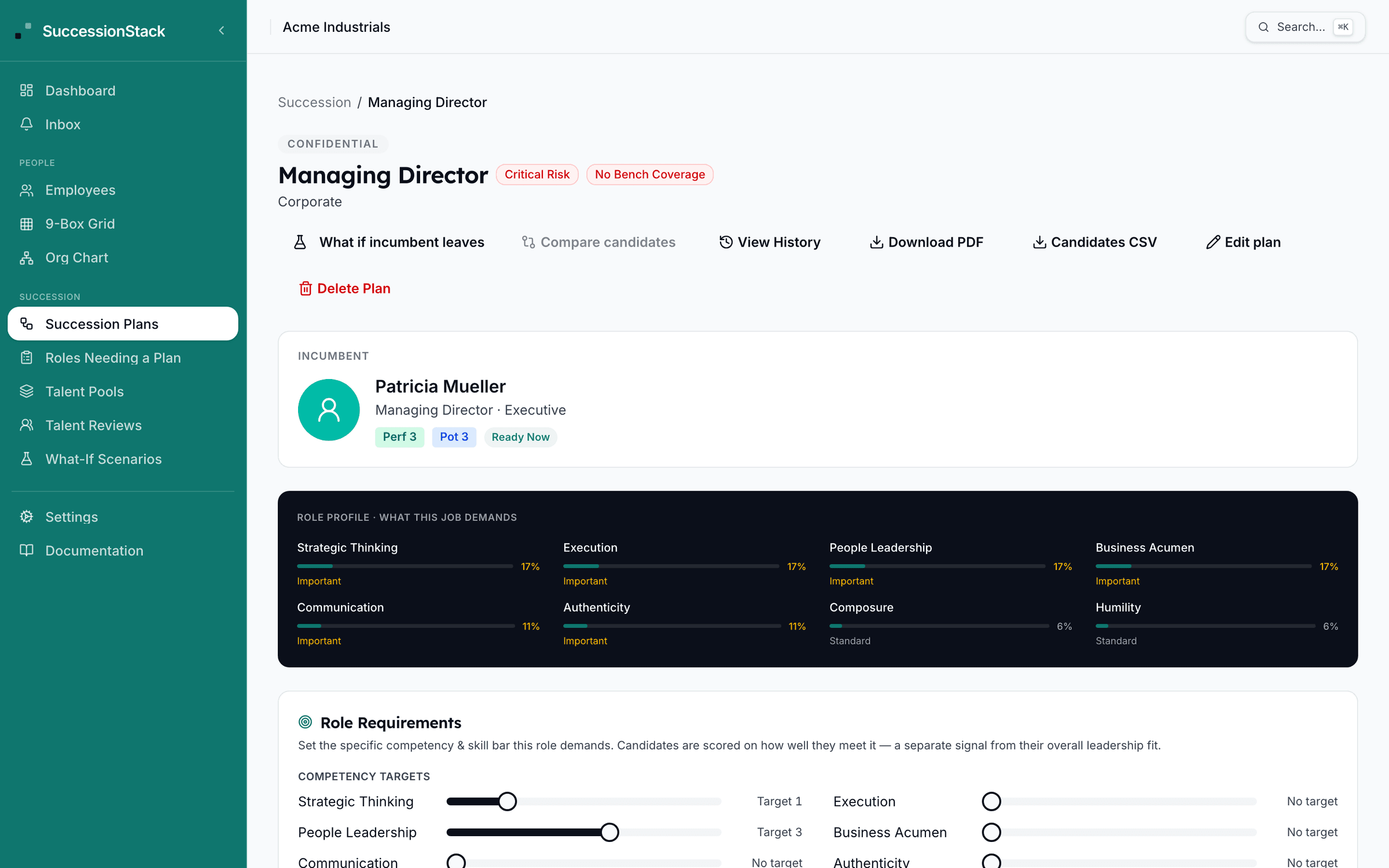
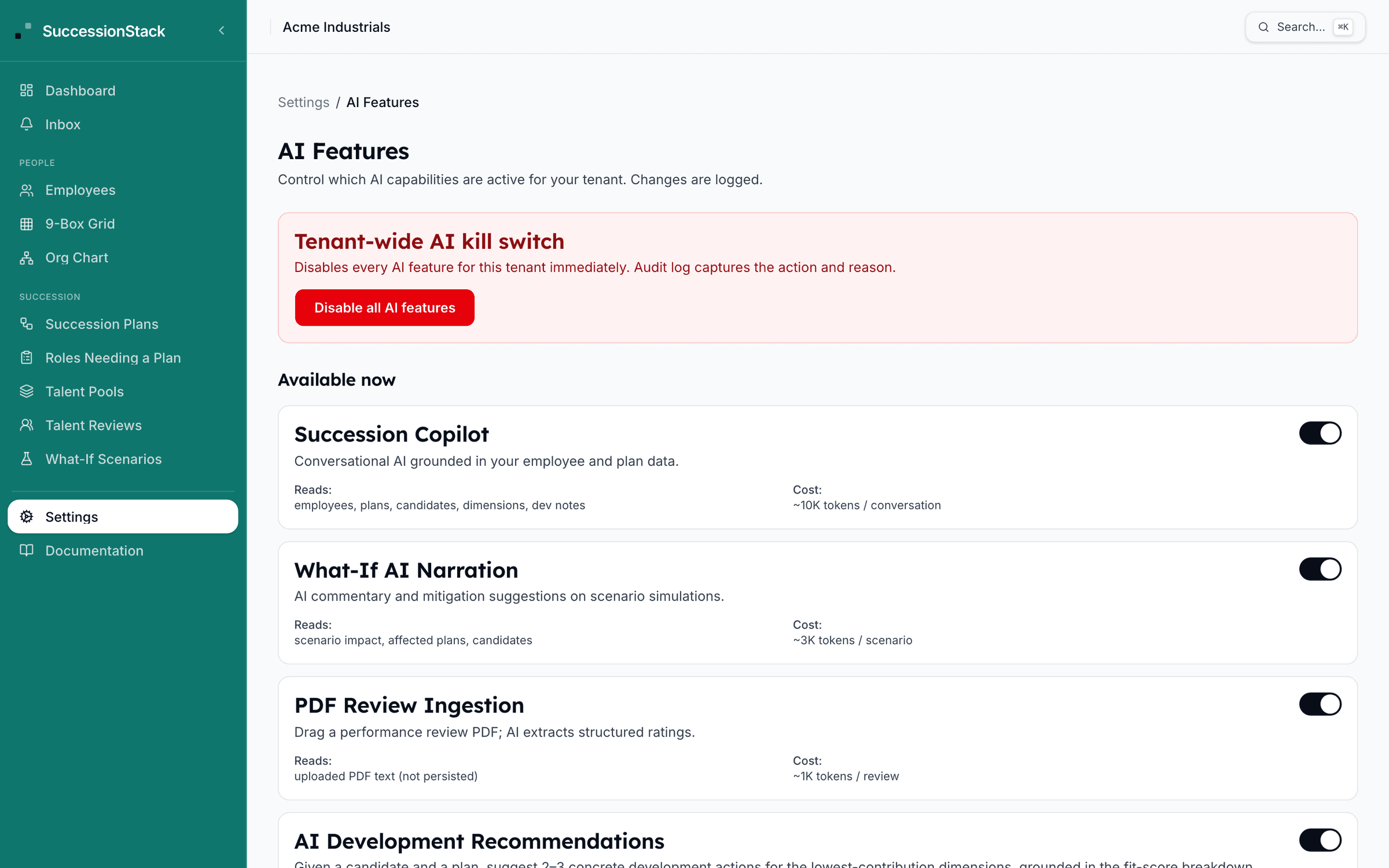
Build a plan per role. Score candidates on 8 dimensions. See bench depth by readiness window: Ready Now, 1 year, 2–3 years.
- Role profile per plan with the 8 leadership dimensions weighted
- Three readiness columns with candidate cards + dimension bars
- Risk + Bench badges on every plan in the list view
- AI scenario narration on what-if changes
Talent Database
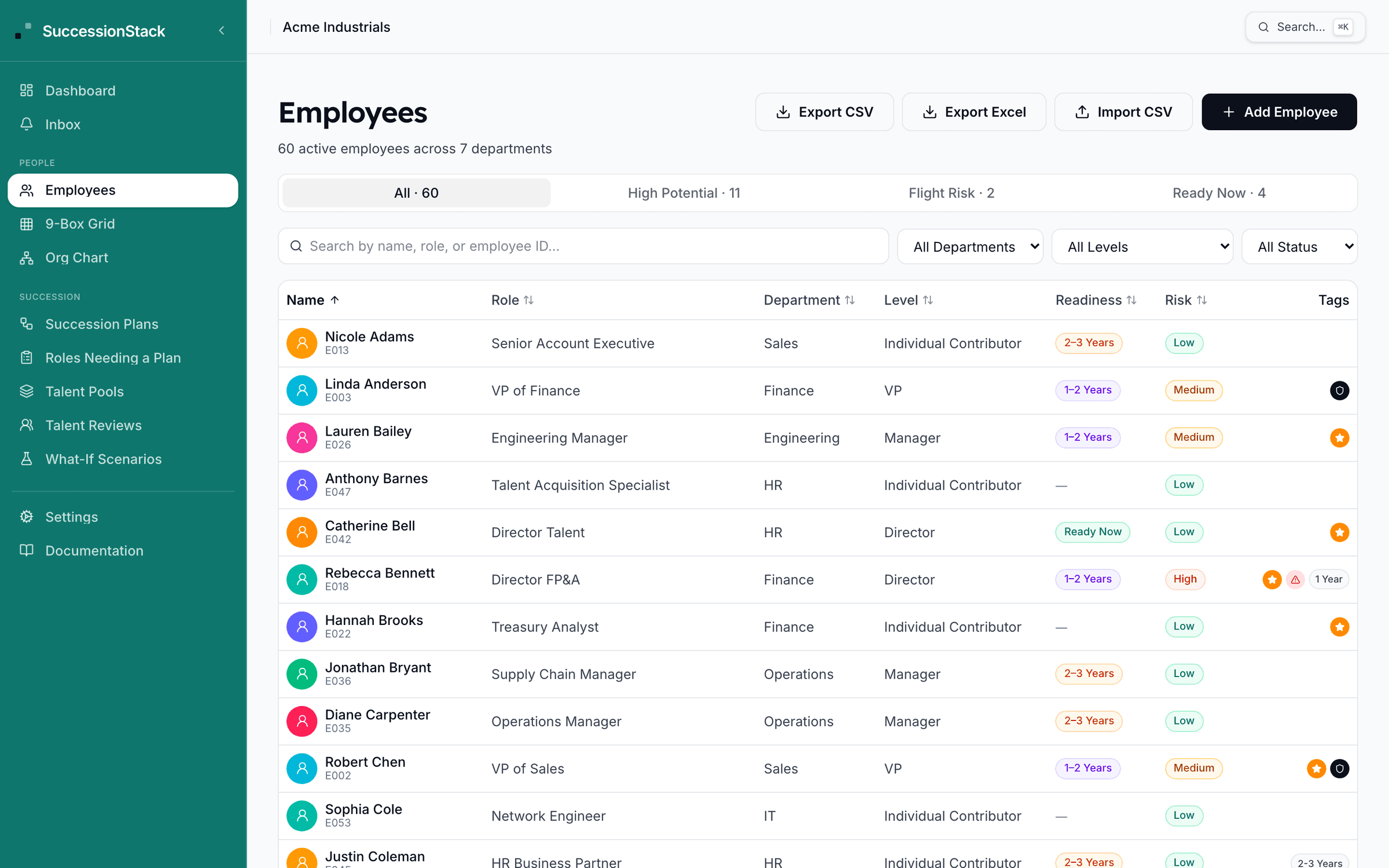
Every employee, scored on the same 8 dimensions. CSV upsert imports 2,000 rows at a time. Card view, list view, or org chart.
- CSV import (2,000-row upsert), CSV export, PDF export
- Card view with dimension bars for at-a-glance scoring
- Filterable by department, level, tenure, scoring band
- Tenant-isolated via row-level security
Org Chart
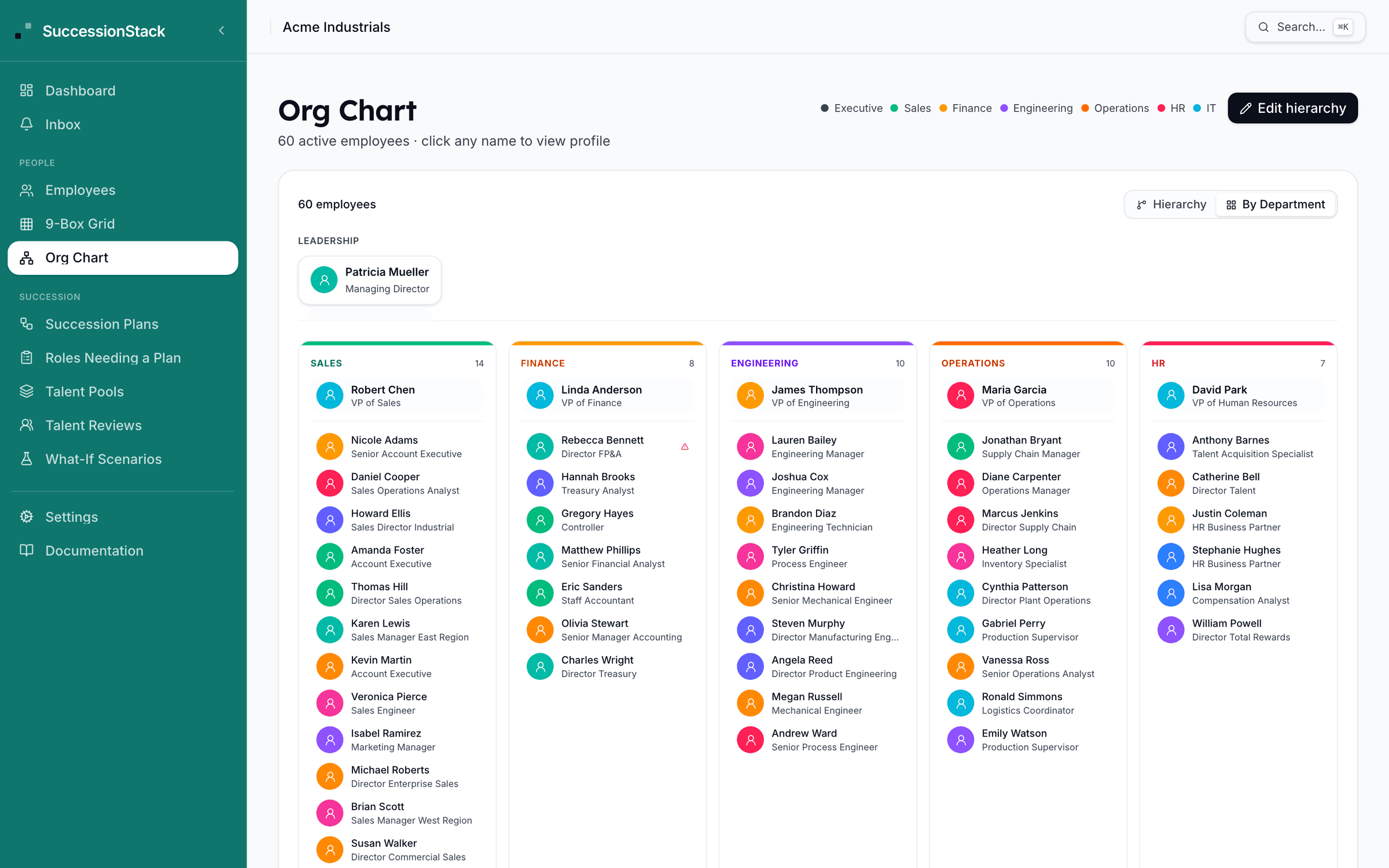
Two views: Hierarchy tree and Department columns. Color-coded by readiness.
- Hierarchy view: tree from Managing Director down
- Department view: columns by function with headcounts
- Click any node to jump to that employee's profile
- Print-friendly export for board packets (save as PDF from the print dialog)
Analytics
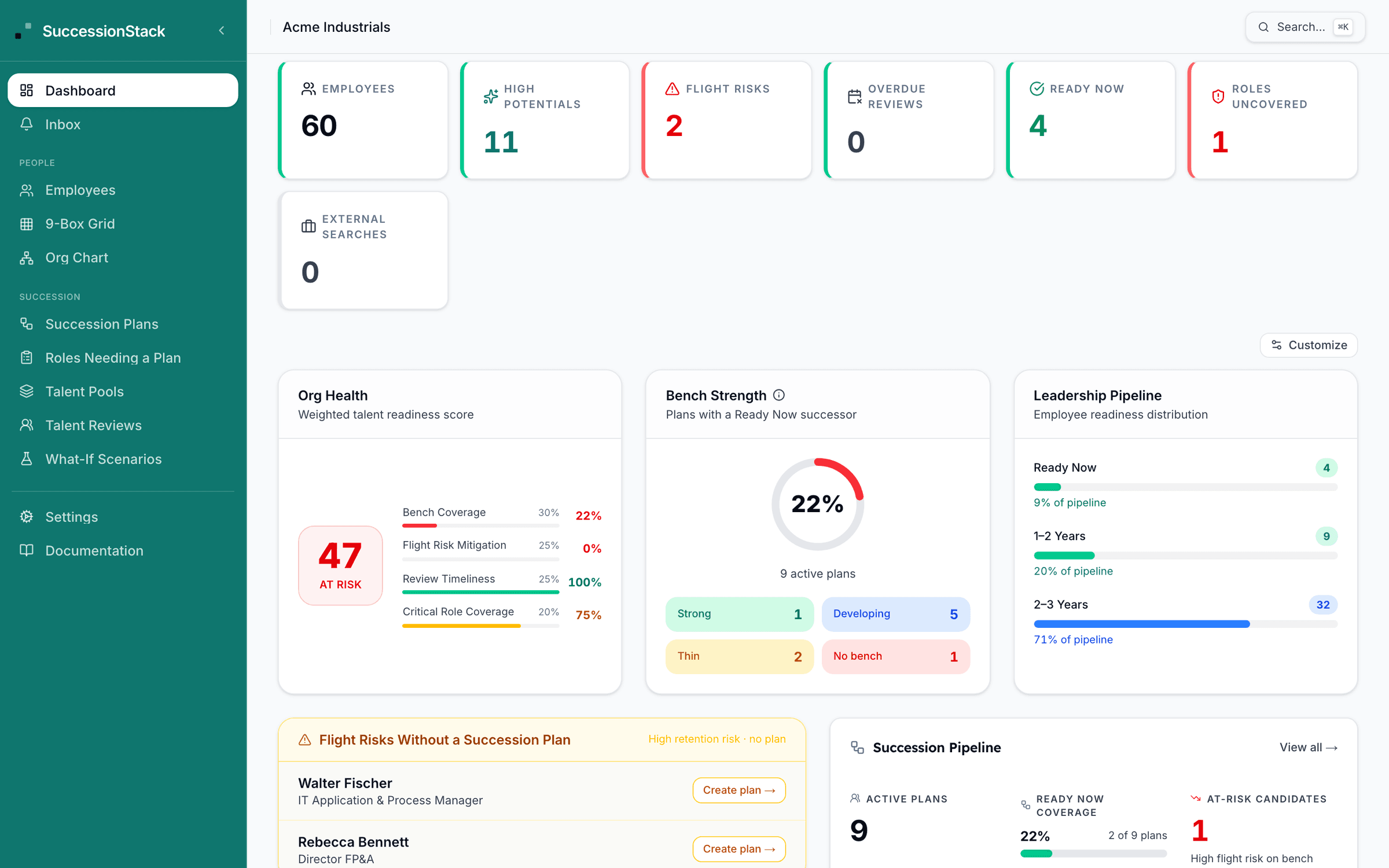
Org health, bench strength, leadership pipeline, scoring distribution. Every chart drills into the underlying people.
- Bench Strength gauge with target threshold
- Org Health composite score (out of 100)
- Leadership pipeline by readiness band
- Scoring distribution by dimension and department
AI Copilot, What-If Narration, PDF Review
Six AI features available today. Token costs surfaced in the UI so finance knows what to expect.
- Copilot: ask anything about your org, get an answer with source citations
- What-If Narration: Claude writes the impact summary for a scenario in plain English
- PDF Review: ingest performance reviews and extract dimension scores
- Also live: AI Suggested Successors, AI Bench Insights, Retention Risk Model
- In development: Dev Note Signals, Calibration Coach, Risk Pattern Detection
What-If Scenarios
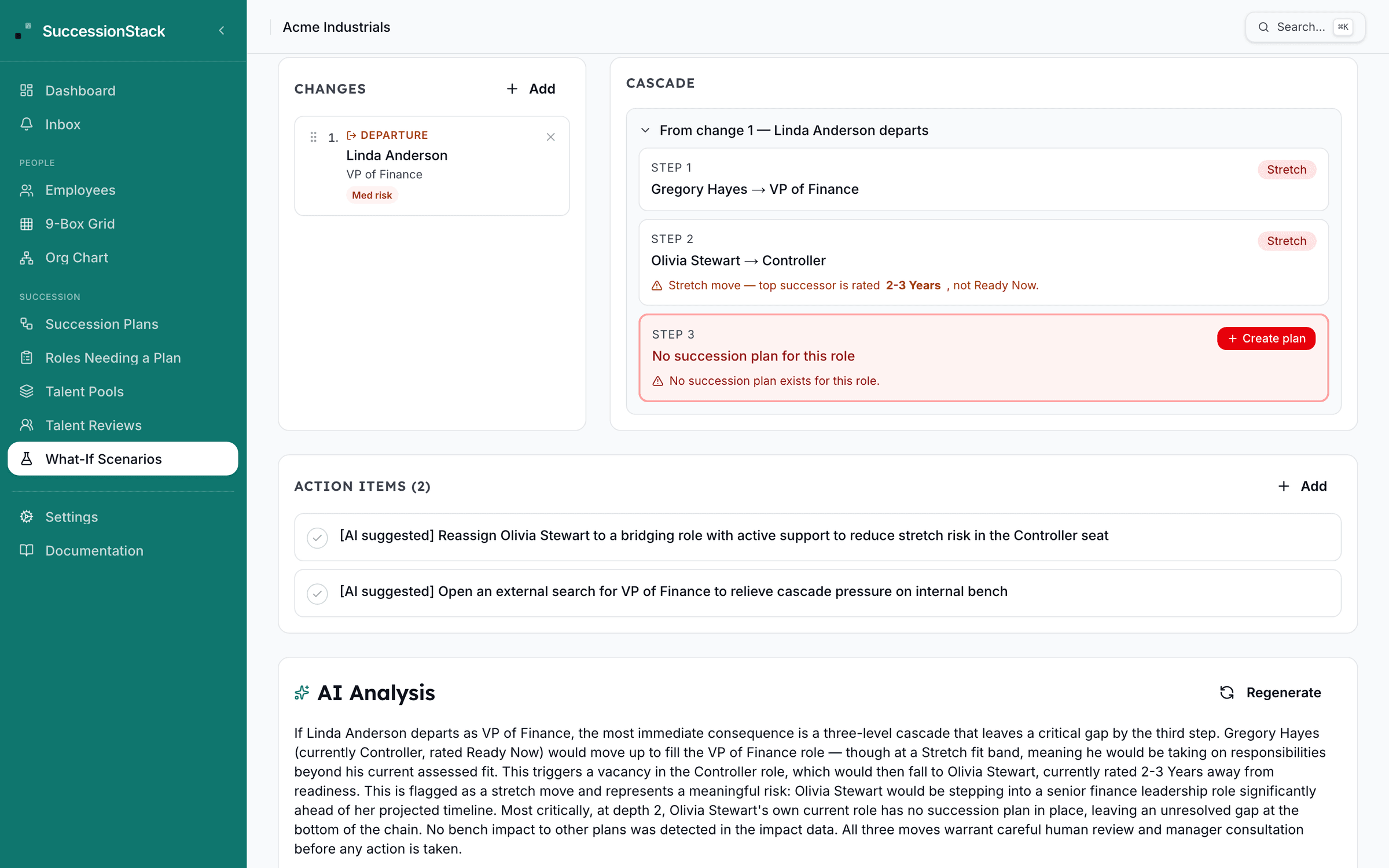
Drop a name into a scenario. See who cascades up, what plans go thin, which roles uncover. AI summarises the impact.
- Cascade analysis up to 3 steps deep
- Bench impact view across affected plans
- AI-generated action items and mitigation suggestions
- Hypothetical mode: never touches your real data
Audit & Compliance
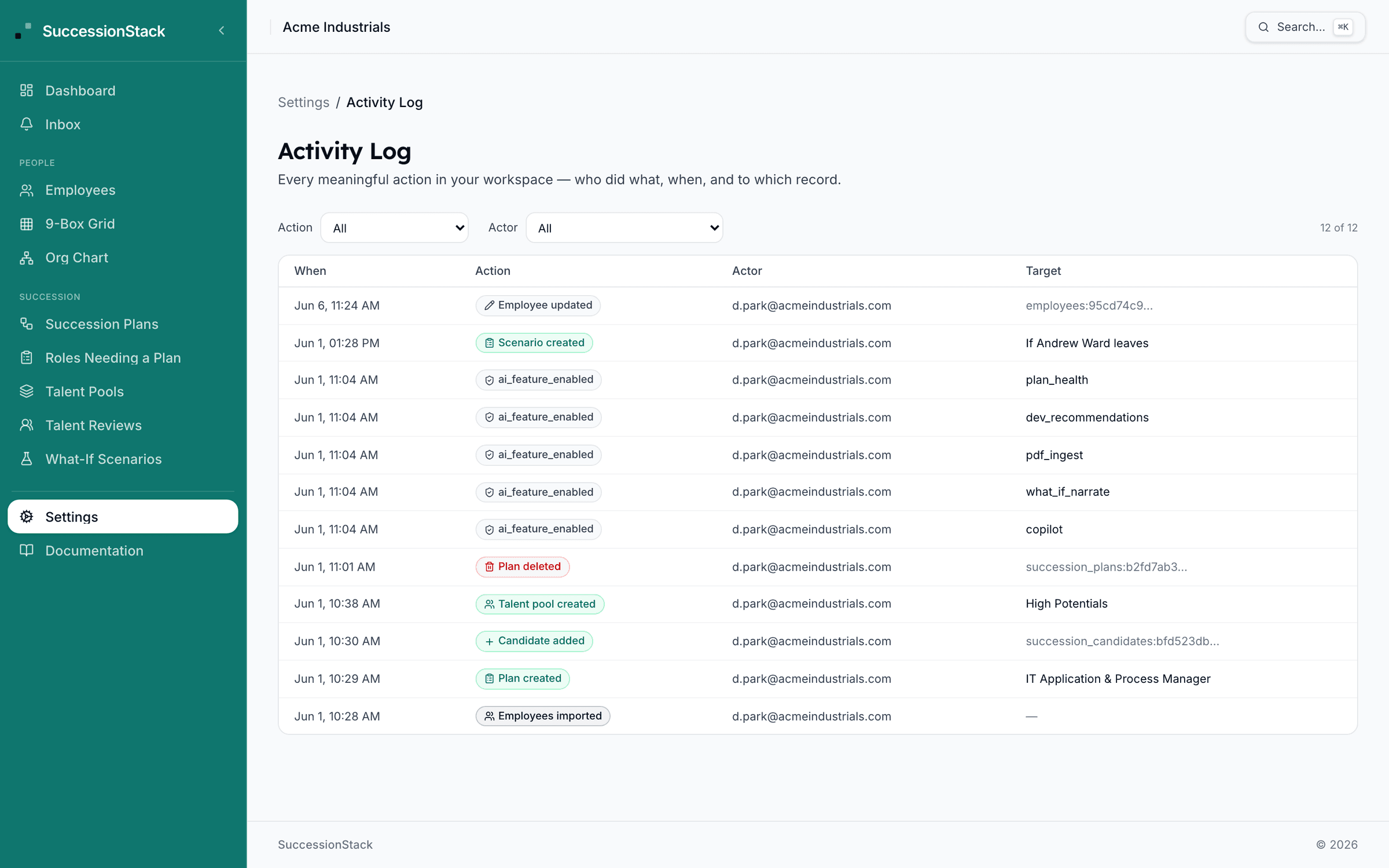
We log every succession decision, score, weight, user, and settings change with who, when, what changed, and why. Filter the log by date and page back through it.
- Append-only activity log across succession decisions, scores, weights, users, and settings
- Reason-for-change on score and weight edits, required per workspace policy
- CSV export of the log, by date range, for compliance review
- Tenant-scoped: actors only see their own org's events
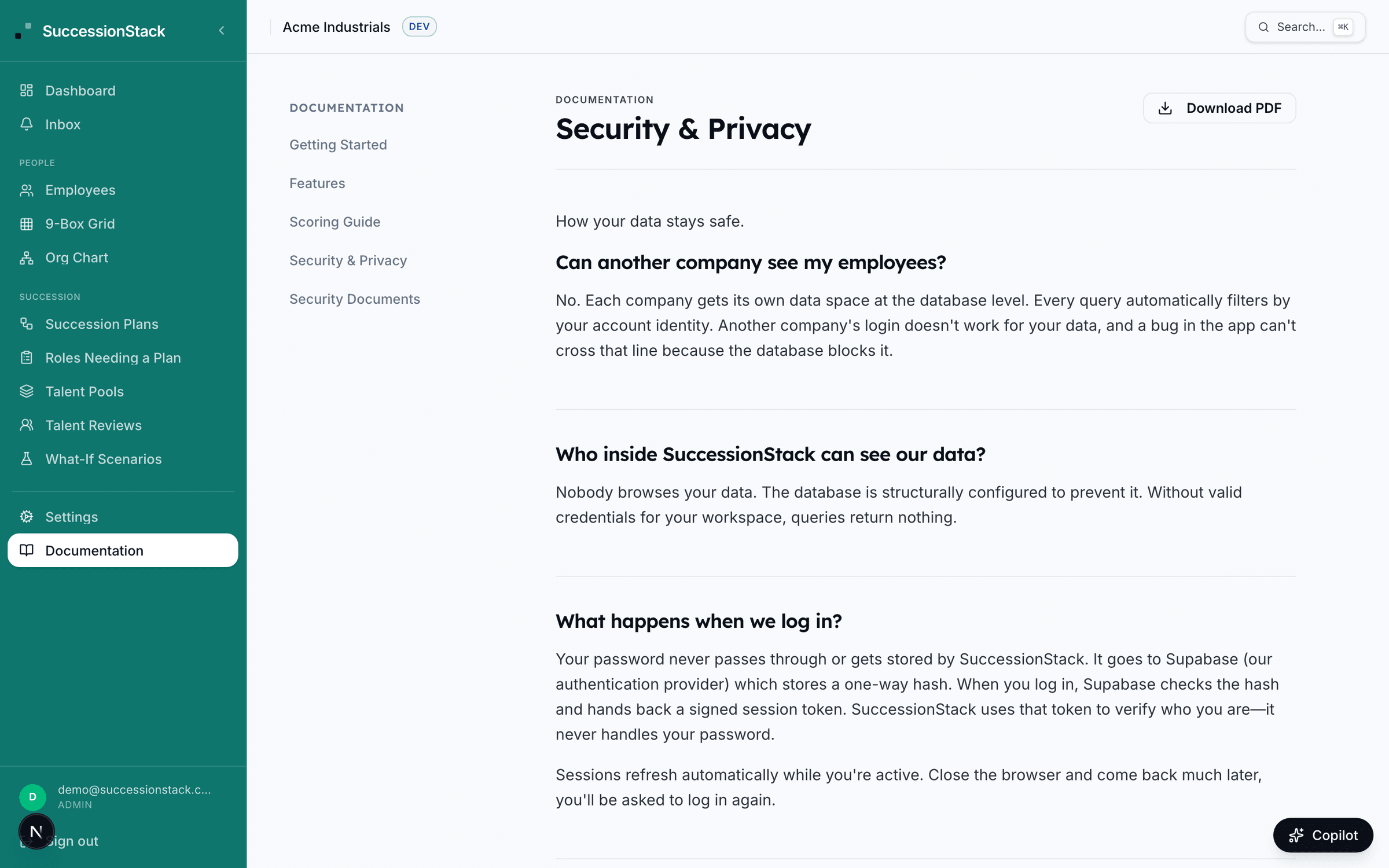
Built to pass your IT review. Isolation at the database layer, not a checkbox.
- Row-level security isolates every tenant on every table
- AES-256 encryption at rest, TLS in transit
- Append-only activity log with reason-for-change on score and weight edits
- Security documentation PDF ready for your IT team before the first call
Evaluating succession planning software
See where your bench breaks before it matters.
Bring your real org chart. We show you the succession gaps, cascade risks, and bench depth in a 30-minute walkthrough. IT security questions answered on the same call.
IT review first? The FAQs answer the security questions honestly →