9-box grid software
The 9-box grid, with the receipts attached.
What is 9-box grid software actually for?
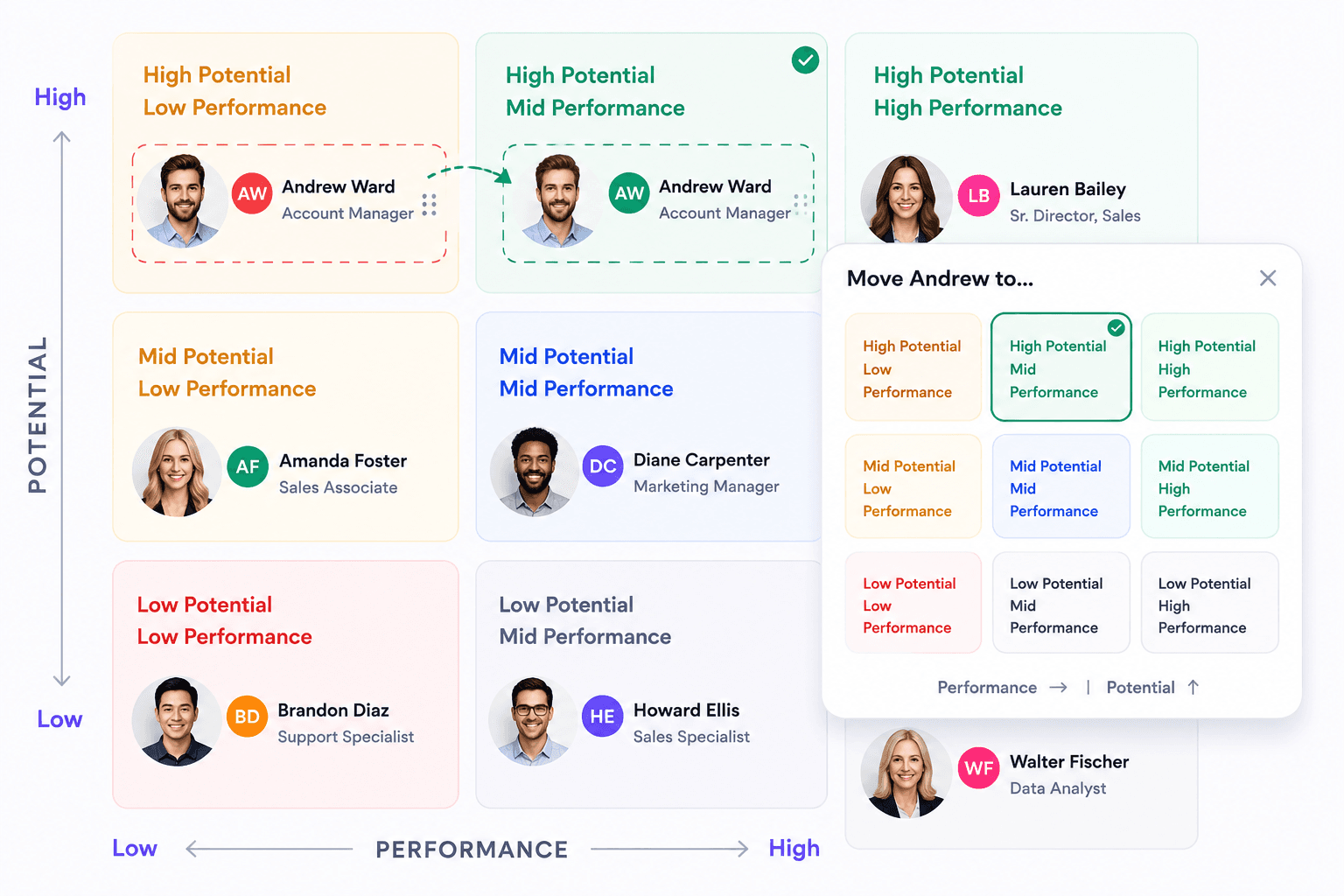
The 9-box grid plots people on two axes, performance against potential, and produces nine cells that give a leadership team a shared vocabulary for talent conversations. The framework is decades old and still earns its place, because the argument it starts is the useful part: when two leaders place the same person in different cells, the standards of the whole organization are being negotiated in real time.
Software enters the picture because the spreadsheet version leaks. Placements made in a workshop get pasted into a deck, the deck gets filed, and by the next cycle nobody remembers why anyone was placed anywhere. The evidence behind a placement, the debate that moved it, and the action it was supposed to trigger all evaporate between meetings.
9-box grid software worth the name does three things the spreadsheet cannot: it ties each placement to scored, dated evidence; it records who moved whom and why, so calibration accumulates instead of resetting; and it connects the top-right cells to actual succession plans, so the grid ends in decisions rather than in a filed PDF.
Placements backed by scores, not vibes.
Every leader in SuccessionStack carries scores on eight weighted leadership dimensions, with the evidence and history attached. When a talent review places someone in a cell, the placement inherits that record: the room debates from the same facts, and the inevitable challenge months later gets an answer instead of a shrug.
The four ways spreadsheet 9-boxes fail
These are the recurring failure modes we built against. Each one is survivable alone; together they are why most grids get rebuilt from scratch every cycle instead of improving.
The placement nobody can explain
A director asks why she sits in the middle cell while a peer sits top-right. The spreadsheet has no evidence column, the meeting notes are gone, and the answer becomes an apology. Scored dimensions with dated evidence end that conversation differently.
Calibration that resets every year
Last cycle's hard-won standards live in the memory of whoever argued loudest. When placements carry history, the next session starts from decisions, not from zero.
Potential that quietly means polish
Without explicit criteria, the potential axis drifts toward presentation skills and familiarity. Named, weighted dimensions keep the axis measuring capacity for bigger roles.
A grid that never becomes a plan
The exercise ends, the deck gets filed, and none of the top-right names appear in a succession plan. In SuccessionStack the grid and the plans share one data model, so a placement is one step from a bench.
A 9-box placement is a claim about a person. Claims need evidence, and evidence needs a home the next meeting can find.
- 8weighted leadership dimensions behind every placement
- 3readiness windows the grid feeds directly into
- 100%of score and placement changes captured in the audit log
How do you build a defensible 9-box grid?
No implementation consultant, no six-month rollout. The path from spreadsheet to working grid is short.
Import your people
CSV in, org structure recognized. Your talent database is live the same afternoon.
Score against dimensions
Rate leaders on the eight dimensions, weighted per role, each score carrying evidence and a date.
Run the calibration
The grid draws itself from the scores. The meeting spends its time on the disagreements that matter.
Feed the bench
High-potential placements flow into succession plans with readiness windows and development actions.
Questions buyers actually ask
See where your bench breaks before it matters.
Bring your real org chart. We show you the succession gaps, cascade risks, and bench depth in a 30-minute walkthrough. IT security questions answered on the same call.
IT review first? The FAQs answer the security questions honestly →